Material Craftsmanship: Optical-Grade Substrate and Precision Dot Design
Light guide panels typically use optical-grade acrylic (PMMA) material with light transmittance reaching 93%, effectively absorbing light . The panel surface is processed with precision light guide dots through hot pressing, silk screening, or laser engraving. After multiple refractions within the panel, the entire surface becomes a uniform light-emitting area, achieving efficient light distribution control .
Structurally, the panel can be paired with diffuser and reflector sheets: the diffuser expands the beam angle to 160°–176°, eliminating harsh stimulation and fogging the light guide dots; the reflector bounces light leaking from the bottom back into the panel for secondary scattering, reducing glare while improving light utilization efficiency .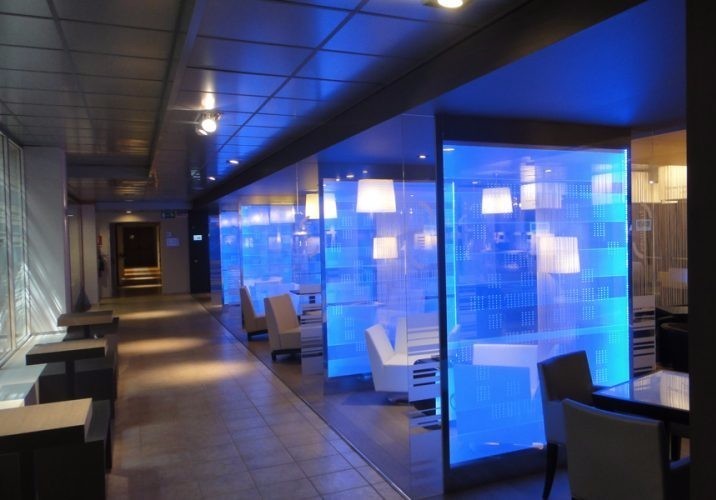
Lighting Design: Uniform Surface Light, Eliminating Glare and Spots
Traditional point light sources produce low light utilization and visual discomfort. The core value of light guide panels lies in converting strong point light into uniform surface light . After refraction and diffusion through the panel, the surface output is full and free from light pollution. With anti-glare design, it causes no visual interference to vehicles or pedestrians .
In engineering applications, curved light guide panels break through the constraints of traditional flat processing, perfectly fitting cylinders and irregular building facades . Arc-shaped panels achieve "lamp-integrated" fusion with architectural surfaces, delivering more uniform illumination, soft and full light effects, and rich visual layering .
Engineering Installation: Hoop-Mounted/Embedded Design for Irregular Carriers
Light guide panel fixtures offer high installation adaptability. Hoop-mounted installation requires no modification to existing guardrails or pillars, securing directly to save installation time and cost; anti-vibration and anti-slip materials are incorporated to withstand long-term vibrations from heavy vehicles without displacement .
In bridge guardrail lighting applications, guide panels are mounted on square railings, serving as decorative elements during the day and illumination at night, achieving "one lamp, two uses" . Some projects supplement with point light sources or floodlights if bridge illumination is insufficient, ensuring a complete light environment .
Scenario Application: The "Invisible Light Band" Illuminating Buildings and Guardrails
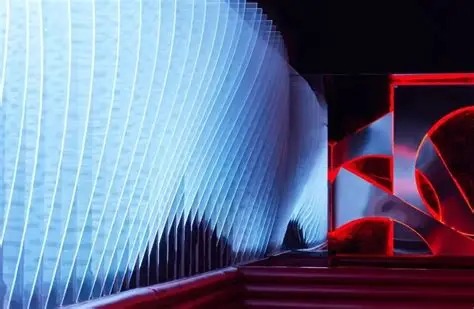
In bridge guardrail lighting, light guide panels outline bridge contours with a "visible light, invisible fixture" approach, delivering full light effects without light pollution while balancing driving safety and landscape aesthetics . For architectural cylinders and irregular facades, curved panels fit surface contours perfectly, achieving a "lamp-integrated" fusion with uniform, soft light on pillars .
For cultural tourism streets and landscape structures, guide panels can present diverse patterns, colors, and text through precision dot design and curved molding, adding artistry and recognition to architecture. Whether serving as primary illumination or landscape accents, this series excels as a luminous bond connecting structure with humanistic atmosphere.


